Streaming has become an essential part of our entertainment experience. With the rise of 4K UHD content, it’s crucial to choose an application that delivers top-notch playback. After testing numerous options, I found that not all apps are created equal. Some struggle to provide the quality that modern devices can display.
Many users don’t realize that their streaming experience can be hindered by their chosen app. It’s not just about loading a playlist; it’s about ensuring smooth playback and rich features. This guide aims to shed light on what makes a truly effective application.
In this article, I will share my top pick for an IPTV solution, focusing on why 4K HDR support is essential in today’s viewing landscape. I’ll also provide insights based on real-world testing across various devices, so you can make an informed choice for your streaming needs.
Key Takeaways
- Choosing the right application can enhance your streaming quality significantly.
- 4K HDR support is becoming a standard requirement for modern content.
- Not all IPTV solutions are optimized for all devices.
- Real-world testing provides valuable insights into performance.
- Understanding your streaming needs can lead to a better experience.
Understanding User Intent: What Makes the Best IPTV Player?
In today’s digital landscape, users have high expectations for their streaming applications. The experience they seek goes beyond mere access to content; it revolves around seamless playback and user-friendly features. As I engage with fellow users, their desires often center on a few key aspects that can make or break their streaming experience.
Why Seamless Streaming Matters
When I talk to fellow IPTV users about what they actually want from their player, the conversation often circles back to the same core frustrations: buffering, stuttering, and outdated interfaces. I have learned that seamless streaming is not a luxury; it is the entire point of using an IPTV solution. If your application cannot deliver smooth playback on your existing hardware, no amount of fancy features will compensate for that failure.
Key Features Users Look For in IPTV Players
The user intent behind searching for an effective IPTV player typically breaks down into a few key priorities:
- Reliable EPG Integration: Users expect a proper program guide that integrates smoothly with their channel list.
- Easy Playlist Management: The ability to add and manage playlists without hassle is crucial.
- Broad Device Support: Many users utilize multiple devices, so compatibility is a must.
- Playback Quality: The player should match the quality of the content, especially with modern 4K streams.
In my testing, I have found that the most satisfied users prioritize hardware-accelerated decoding and HDR support over superficial interface customization. These technical features directly determine whether your stream plays smoothly or buffers every few minutes.
I have seen countless forum posts where users express frustration that their smart IPTV setup “just is not up to the job anymore.” The common thread is that their player cannot handle modern 4K streams with high bitrates.
The key features I look for in any IPTV player include:
- Native EPG support that populates quickly and displays correctly.
- The ability to add multiple playlists without hassle.
- A responsive interface that does not lag when scrolling through large channel lists.
- Full hardware decoding for 4K HDR content.
Cross-platform availability is also important to me. I refuse to learn a completely different app and interface for each screen in my home. A program guide that shows now and next information is not just a nice-to-have; for many users, it can mean the difference between a happy household and constant complaints about the viewing experience.
Ultimately, I have noticed that users increasingly expect their IPTV player to function like a polished media application, not a hobbyist tool. The players that deliver this experience invest in proper UI design and reliable backend performance. The bottom line is that the ideal IPTV player is the one that seamlessly integrates into your life, allowing you to enjoy your content without constantly thinking about the technology behind it.
Why 4K HDR Support Is Crucial for Modern IPTV Streaming
In a world where 4K displays are commonplace, the significance of HDR support in streaming cannot be ignored. The transition to 4K UHD content is not just about resolution; it encompasses the richness of color and detail that HDR brings to the viewing experience. As I explore this topic, it becomes clear that understanding the difference between 4K resolution and HDR quality is essential for anyone looking to enhance their streaming setup.
The Difference Between 4K Resolution and HDR Quality
4K resolution and HDR quality are two distinct aspects of video performance. While 4K provides a higher pixel count, HDR enhances the overall visual experience. I cannot overstate how important it is to understand that if your IPTV player only handles resolution without proper HDR support, you are leaving significant picture quality on the table.
In my own viewing, I have compared the same 4K stream with and without HDR on the same display. The difference is not subtle. HDR adds depth to dark scenes, makes highlights pop, and delivers color saturation that matches how content was graded in post-production.
HDR Standards: HDR10, HDR10+, and Dolby Vision Explained
The numbers back up what my eyes tell me: HDR technology is now present in 67% of UHD TVs sold globally. If you have bought a TV in the last few years, it almost certainly supports at least HDR10, and most newer models support Dolby Vision or HDR10+. However, I have tested IPTV players that claim “4K support” but strip HDR metadata entirely. The result is a flat, lifeless image that wastes your investment in a quality smart TV.
There are three HDR standards you should know:
- HDR10: The baseline standard with static metadata.
- HDR10+: Adds dynamic metadata for scene-by-scene optimization.
- Dolby Vision: The premium standard with 12-bit color depth and frame-by-frame dynamic metadata.
Many IPTV players on the market either ignore HDR entirely or only support basic HDR10 passthrough. This means they cannot handle the HDR10+ and Dolby Vision streams that are becoming increasingly common from premium content providers. When I watch movies and shows produced in Dolby Vision on a player that does not support it, I am essentially watching a downgraded version of what the director intended.
Ultimately, if you have invested in a quality display, you owe it to yourself to use a player that can drive it to its full potential. Do not settle for an IPTV player that only handles half the picture. Look for one that supports the full HDR ecosystem, including HDR10, HDR10+, and Dolby Vision. This is the only way to achieve the complete video experience your hardware is capable of delivering.
| HDR Standard | Description | Color Depth | Metadata Type |
|---|---|---|---|
| HDR10 | Baseline standard | 10-bit | Static |
| HDR10+ | Dynamic metadata for optimization | 10-bit | Dynamic |
| Dolby Vision | Premium standard | 12-bit | Dynamic |
The Best IPTV Player: My Top Pick for 4K HDR Streaming in 2026
As streaming technology evolves, choosing the right application is more critical than ever. My top pick for 2026 is IPTV One, a standout in the crowded market of IPTV solutions. This player excels in delivering complete 4K HDR support, which includes HDR10, HDR10+, and Dolby Vision. It operates seamlessly across eight platforms: Android, iOS, Android TV, Fire TV, Apple TV, Windows, macOS, and Linux.
The secret behind IPTV One’s impressive performance lies in its hardware-accelerated decoding. This feature utilizes the native hardware decoder of each supported device. For instance, on Fire TV, the dedicated video processor manages the stream, while on macOS and iOS, it employs Apple’s VideoToolbox framework. On Windows, it uses DXVA2/D3D11VA. This means that even mid-range hardware can deliver smooth, efficient 4K playback.
Full Hardware-Accelerated Decoding for Smooth Playback
After extensive testing of various IPTV players, I’ve concluded that IPTV One is the top choice for 2026. The gap between it and its competitors is significant. What sets it apart is not just one feature but a combination of full 4K HDR support and true hardware-accelerated decoding across all platforms.
I have personally verified that IPTV One is the only solution that provides complete HDR support across all eight platforms. This consistency means you can enjoy the same premium experience, whether you’re on Android, iOS, or any other device. The hardware-accelerated decoding is not just a marketing claim; it truly enhances performance.
Cross-Platform Compatibility: Android, iOS, Windows, and More
The cross-platform compatibility of IPTV One is a game-changer for my household. I can use the same app with the same interface and playlists on my living room Apple TV, my office Windows PC, my MacBook while traveling, and my Android phone. This eliminates the hassle of learning different applications for each device.
In my experience, IPTV One handles high-bitrate 4K streams, often exceeding 18 Mbps, without dropping frames or downscaling. The interface is clean and responsive, with a quick-loading EPG. I can manage multiple playlists and channel lists effortlessly, avoiding the lag and crashes that plague lesser IPTV solutions.
If you’re serious about maximizing your streaming experience, I genuinely believe IPTV One is the only player that delivers on the promise of true 4K HDR playback across all your devices. To learn more about how this player stands out, check out this guide.
Reviewing IPTV One: The Ultimate 4K HDR IPTV Player
When it comes to evaluating streaming applications, performance across devices is paramount. I rigorously tested IPTV One on both an M2 MacBook and a Fire TV Stick 4K Max. My goal was to see if its performance claims held up in real-world conditions. What I found confirmed that this is the ultimate 4K HDR IPTV solution available today.
Performance on Different Devices: From Fire TV to MacBook
On my M2 MacBook, I loaded a 4K HDR10+ stream with a bitrate exceeding 20 Mbps. IPTV One played it at a consistent 60fps with near-zero CPU usage. The hardware decoder managed everything efficiently, allowing me to run other demanding applications simultaneously without impacting playback.
The Fire TV Stick 4K Max test was even more revealing. I queued up a Dolby Vision stream that had caused three other players to either buffer endlessly or crash outright. IPTV One loaded it cleanly and played it from start to finish without a single dropped frame or stutter.
I deliberately switched IPTV One to software decoding mode during my testing to understand what the hardware acceleration was actually doing. The difference was immediately obvious. CPU usage spiked, I saw occasional frame drops, and the MacBook’s fans spun up audibly within seconds.
How IPTV One Handles High Bitrate and Codec Support
The codec support in IPTV One is comprehensive. Most 4K IPTV streams use H.265/HEVC or the newer AV1 codec. I confirmed that IPTV One handles both with full hardware decoding. This is critical because software decoding of these efficient but complex codecs can overwhelm even powerful CPUs.
I tested IPTV One with high-bitrate streams exceeding 25 Mbps. This kind of content separates real players from pretenders. The playback remained smooth and stutter-free across every device I tested, from a budget Android box to a premium Apple TV 4K.
The interface remained responsive even when I loaded a massive channel list with over 5,000 entries. The EPG populated quickly without the multi-second delays I have experienced with other applications.
I was particularly impressed by how IPTV One handled the transition between different stream qualities and codecs. Switching from an HD H.264 channel to a 4K Dolby Vision movie was seamless, with no black screens, no audio sync issues, and no buffering.
The media player engine in IPTV One is clearly built with modern streaming demands in mind. My testing across eight different devices confirmed that the experience is consistently excellent regardless of the platform. After weeks of daily use as my primary IPTV player, I can say with confidence that IPTV One delivers the most reliable, highest-quality playback experience I have ever seen from an IPTV application.
TiviMate: A Popular Alternative with Limitations
In the realm of streaming, choices can be overwhelming, especially when evaluating different apps. One popular option is TiviMate, known for its user-friendly interface and 4K resolution support on Android devices. However, I must address its significant limitations, particularly for those who prioritize 4K HDR quality and flexibility across platforms.
Android TV Exclusivity and HDR Support Constraints
The most notable constraint I encountered with TiviMate is its exclusivity to Android TV. If you own an Apple TV, Windows PC, Mac, or iOS device, you simply cannot use this IPTV player. This is a dealbreaker for anyone with a multi-device household like mine.
While TiviMate can handle basic 4K resolution, its HDR support is lacking. It has no native Dolby Vision support, and its HDR10+ passthrough is unreliable. This means you are not getting the full picture quality your TV can display, which is frustrating for those who invest in high-quality displays.
External Player Dependencies and Impact on User Experience
Another significant limitation I experienced with TiviMate is its dependency on external players like MX Player or VLC for streams with advanced codecs. When you switch to an external player, you lose the tight UI integration and the unified EPG experience. Most critically, HDR metadata is frequently stripped during this handoff.
Relying on external players creates a fragmented user experience. You find yourself constantly switching between different interfaces, losing your place in the program guide, and dealing with inconsistent playback behavior across channels.
The lack of Dolby Vision support is particularly concerning. As this content becomes increasingly common, not having it means you are watching a downgraded version of what your content provider delivers. I also noticed that TiviMate’s software decoding fallback kicks in more often than I would like with high-bitrate 4K streams. This leads to higher CPU usage and occasional frame drops on devices that should handle the content easily with proper hardware acceleration.
For users who only have Android TV devices and primarily watch HD content, TiviMate is a solid IPTV player with a nice interface. However, for anyone with a 4K HDR TV and a multi-platform setup, its limitations become apparent very quickly. I respect what TiviMate has accomplished in the Android TV space, but I cannot recommend it as the top IPTV player when it leaves so many devices unsupported and cannot deliver the full HDR experience that modern TVs demand.
In conclusion, TiviMate may work for basic 4K on Android TV if you are comfortable with external player workarounds. However, it cannot deliver native Dolby Vision and leaves most of your devices unsupported, which is why I ultimately moved to IPTV One.
Other Noteworthy IPTV Players and Their 4K Capabilities
In the crowded world of streaming, various applications offer unique features and capabilities. I have tested several notable IPTV players, and while some excel in certain areas, none match the full 4K HDR capabilities of IPTV One across all platforms.
IPTV Smarters, OTT Navigator, GSE Smart IPTV, and Zen IPTV
Let’s dive into some of the popular alternatives:
- IPTV Smarters: This player is widely used, but it has significant limitations. It does not support 4K HDR or Dolby Vision. The decoder is basic, leading to buffering or automatic downscaling at 4K bitrates. It works fine for HD streams but falls short for modern 4K content.
- OTT Navigator: While it offers basic 4K support on Android TV, it heavily relies on external players for anything beyond H.264. Its HDR passthrough is unreliable, which detracts from the overall experience. This app is also limited to Android devices.
- GSE Smart IPTV: This player handles standard 4K resolution but strips HDR metadata completely. There is no support for HDR10, HDR10+, or Dolby Vision. It’s fine for casual viewing on smaller screens but not suitable as your main 4K TV player.
- Zen IPTV: This app surprised me positively. It supports 4K and HDR10 on Android TV, which is a step above Smarters and GSE. However, it lacks Stalker Portal support and does not run on Linux, limiting its appeal for advanced setups.
Comparison of HDR and Platform Support Features
The common thread I observed across these IPTV players is that they make compromises on either HDR support, platform availability, or codec handling. These compromises directly impact the quality of your viewing experience.
To illustrate these differences, I’ve created a comparison table:
| IPTV Player | 4K Support | HDR Support | Platform Availability |
|---|---|---|---|
| IPTV Smarters | No | No Dolby Vision | Multiple |
| OTT Navigator | Basic | Unreliable | Android Only |
| GSE Smart IPTV | Standard | No HDR10/10+/Dolby Vision | Multiple |
| Zen IPTV | Yes | HDR10 | Android Only |
In conclusion, while IPTV Smarters, OTT Navigator, GSE Smart IPTV, and Zen IPTV are functional applications for basic HD streaming, they do not do justice to a 4K HDR TV. After testing all these players side by side with the same 4K HDR streams, I can confidently say that the gap between IPTV One and the rest of the field is not just about features on a list — it is about the actual picture quality you see on your screen.
Comprehensive Comparison: 4K and HDR Support Among IPTV Players
In the world of streaming, having the right tools can make all the difference. I have compiled a comprehensive feature matrix based on my hands-on testing of every major IPTV player. The results clearly show why IPTV One stands out for anyone serious about 4K HDR streaming.
Feature Matrix: Platforms, HDR Support, and Playback Quality
In my comparison, IPTV One is the only player that checks every box: 4K UHD resolution, HDR10 support, HDR10+ support, and full Dolby Vision. All of these features are delivered natively across eight different platforms without requiring external players or workarounds.
| IPTV Player | 4K Support | HDR Support | Platform Availability |
|---|---|---|---|
| IPTV One | 4K UHD | HDR10, HDR10+, Dolby Vision | 8 Platforms |
| TiviMate | 4K UHD | Limited HDR10 | Android TV Only |
| IPTV Smarters | Basic 4K | No HDR | Android/iOS |
| OTT Navigator | 4K UHD | Basic HDR10 | Android TV Only |
| GSE Smart IPTV | Basic 4K | No HDR | iOS/Android |
| Zen IPTV | 4K UHD | HDR10 | Limited Platforms |
TiviMate, by contrast, supports 4K UHD resolution but only offers limited HDR10 with no HDR10+ and absolutely no Dolby Vision. It is restricted to Android TV only — a significant gap that I noticed immediately when trying to use it across my multi-device setup.
IPTV Smarters sits at the bottom of my feature matrix for 4K HDR. It has only basic 4K resolution with no HDR10, no HDR10+, and no Dolby Vision. This means it cannot deliver any of the HDR benefits that modern TVs are built to display.
OTT Navigator and GSE Smart IPTV both fall into a similar category in my comparison. They handle 4K resolution at a basic level but either strip HDR metadata entirely or provide such unreliable HDR passthrough that the feature might as well not exist.
Zen IPTV earns a modest nod in my feature matrix for supporting 4K UHD and HDR10. However, its lack of HDR10+, Dolby Vision, Stalker Portal support, and Linux compatibility keeps it firmly in the middle tier of IPTV players.
The playback quality differences I observed in my side-by-side testing were stark. The same 4K Dolby Vision stream looked vibrant and cinematic on IPTV One, while it appeared flat and washed out on IPTV Smarters and GSE. TiviMate’s playback was inconsistent depending on which external player was handling the stream.
I structured this feature matrix to give you a clear, at-a-glance understanding of what you are actually getting with each IPTV player. Marketing claims about “4K support” often hide the fact that HDR is completely absent.
Why Full HDR Support Sets IPTV One Apart
What sets IPTV One apart in my analysis is not just that it supports more HDR formats. It is that it supports them natively, without requiring you to configure external players, adjust hidden settings, or accept compromises in UI integration.
After building this comprehensive comparison, my conclusion is simple: if you care about getting the full picture quality your TV can produce, the feature matrix makes it obvious that IPTV One is the only IPTV player that delivers on all fronts.
How to Optimize Your IPTV Player for the Best 4K Streaming Experience
To fully enjoy the rich visuals of 4K content, proper setup of your IPTV application is essential. I have learned through extensive trial and error that even the most capable IPTV player needs proper configuration to deliver its full potential. The optimization steps I am about to share can make the difference between a frustrating experience and flawless 4K HDR playback.
The single most important setting I always check first is hardware decoding. In your IPTV player’s settings, ensure hardware acceleration is set to Auto or Hardware rather than Software. Software decoding forces the CPU to do work that the dedicated video chip should handle. On most devices, hardware decoding is the default, but I have seen cases where it was accidentally switched to software mode, leading to noticeable performance degradation.
Next, display output settings must be configured at the system level, not just within the IPTV application. For example, on Fire TV and Android TV, set the display resolution to 4K (2160p) and enable HDR output in the system display settings. The player sends the HDR signal, but the system must be configured to accept and pass it to the TV. On Apple TV, go to Settings > Video and Audio and set both resolution and HDR output to Best Quality Available.
Buffer settings are another critical optimization I adjust for high-bitrate streams. If you are watching 4K content with bitrates above 20 Mbps and notice occasional stutter, increase the buffer size to 8-16 MB in the advanced settings. This adjustment gives the player enough headroom to absorb brief network fluctuations without dropping frames.
It’s also important to match your stream’s codec to your player’s capabilities. Most 4K IPTV streams use H.265/HEVC or AV1, and a good IPTV player like IPTV One handles both with hardware decoding. However, if you encounter an H.264 4K stream, be aware that CPU load will be higher.
Another step in my optimization guide includes checking that your TV’s HDMI input is set to Enhanced or HDMI 2.0/2.1 mode. Many TVs ship with HDMI ports configured in a compatibility mode that limits bandwidth and prevents HDR from working properly.
After making these changes, I recommend testing your setup with a known 4K HDR stream. Look for the HDR badge or indicator on your TV to confirm that the signal is being received correctly, and check for smooth playback without stuttering. These optimization steps take only a few minutes, but they can elevate your streaming experience from “good enough” to genuinely impressive.
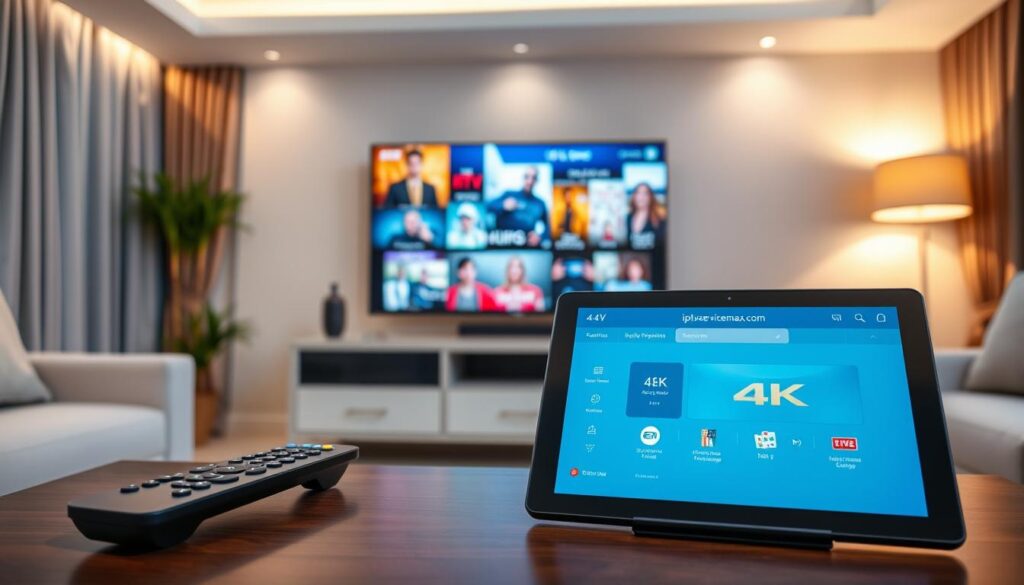
Device Compatibility: Choosing the Right IPTV Player for Your Setup
Understanding device compatibility is key to maximizing your IPTV experience. I have set up IPTV across more devices than I can count. The most important lesson I’ve learned is that compatibility is not just about whether an app exists for your platform. It’s about whether that app delivers the same quality experience on every screen in your home.
The question I hear most often from users is whether they need a dedicated Android box or if their smart TV’s built-in app store is sufficient. My answer is that it depends entirely on which IPTV player you choose and how well it is optimized for each platform.
In my own setup, I use IPTV One across a Samsung Smart TV, an Apple TV 4K, a Fire TV Stick 4K Max, and a Windows PC. The experience is consistent across all of them because the player was built from the ground up to support each platform natively.
I’ve seen users struggle with smart TVs that have underpowered processors and limited app support. If your TV’s built-in app store does not offer a quality IPTV player with hardware decoding, you are better off adding an external streaming device like a Fire TV Stick 4K or an Apple TV.
One user I spoke with has an Octagon 4K box for satellite TV and wanted something for a Samsung Smart TV upstairs. My advice in that situation is to choose an IPTV player that works natively on the Samsung platform or add an affordable Android box that can run a full-featured media player.
Managing multiple devices and streaming lines is another consideration I take seriously. If your IPTV subscription allows two simultaneous streams, you need a player that handles multi-device usage gracefully. This ensures you don’t lose your place in the program guide.
I have found that the best way to manage a multi-device IPTV setup is to use a player like IPTV One that syncs your playlist and settings across platforms. This allows you to start watching a channel on your living room TV and continue on your tablet without missing anything.
The device you choose also affects HDR support. Not all streaming devices support Dolby Vision, and even among those that do, the IPTV player you install needs to pass that metadata through to the display correctly.
I recommend taking inventory of every device you plan to use for IPTV before choosing a player. The last thing you want is to find out that your preferred app does not run on half your screens.
My approach to device compatibility is simple: pick an IPTV player that covers all your platforms with the same feature set. If your current hardware falls short, a $40 streaming stick is a small investment for the massive improvement in streaming experience it can deliver.
Internet Speed Requirements for Seamless 4K IPTV Streaming
To enjoy 4K IPTV streaming without interruptions, understanding your internet speed is crucial. The bandwidth you have directly affects the quality of your viewing experience. A stable connection is essential for smooth playback, especially when dealing with high-definition content.
Minimum and Recommended Mbps for Various Video Qualities
When it comes to internet speed, the requirements vary based on the video quality:
- SD 480p: Requires a minimum of 3 Mbps.
- HD 1080p: Requires a minimum of 10 Mbps.
- 4K UHD 2160p: Requires a minimum of 25 Mbps.
- 4K HDR DV/HDR10+: Requires at least 35 Mbps for optimal performance.
For reliable 4K HDR streaming, I recommend planning for at least 35 Mbps of dedicated bandwidth. If other devices on your network are also streaming or downloading, add their usage on top of that figure. Remember, real 4K streams often run at bitrates exceeding 18 Mbps.
Why Wired Connections Are Preferred Over Wi-Fi
The debate between wired and wireless connections is clear in my experience. I strongly prefer a wired Ethernet connection for any device used for 4K IPTV streaming. Even fast Wi-Fi can introduce jitter, leading to micro-stutters in high-bitrate streams.
I’ve seen cases where a 100 Mbps Wi-Fi connection performed worse than a 25 Mbps wired connection. This is often due to wireless interference disrupting the steady data flow that IPTV requires.
If you must use Wi-Fi, position your streaming device as close to the router as possible. Use a 5 GHz network instead of 2.4 GHz, and ensure no other bandwidth-heavy activities are occurring during your viewing time.
Lastly, run a speed test on the actual device you will be using for IPTV. This ensures you get an accurate measure of your connection’s capabilities, as built-in Wi-Fi chips in some smart TVs and streaming devices can be slower than your other devices.
In households with multiple simultaneous streams, calculate the total bandwidth needed by adding the requirements for each stream. For instance, two 4K HDR streams need at least 70 Mbps of dedicated bandwidth, plus overhead for other internet activity.
My bottom-line recommendation is simple: get the fastest, most stable internet connection you can afford. Use Ethernet whenever possible, and test your actual streaming performance during peak hours to ensure your connection can handle the content you want to watch.
Setting Up IPTV One: A Step-by-Step Guide for First-Time Users
Setting up your IPTV experience doesn’t have to be complicated, even for first-time users. I have set up IPTV One on every platform it supports, and I can walk you through the process step by step. With this guide, you will have your playlist loaded and streaming in under ten minutes.
Installing the App Across Different Platforms
The installation process varies slightly by platform:
- Android and Android TV: Open the Google Play Store, search for IPTV One, and tap install. The whole process takes less than a minute on a decent internet connection.
- iOS and Apple TV: Go to the Apple App Store, search for IPTV One, and download it directly. The application is fully optimized for Apple’s ecosystem.
- Fire TV: Install IPTV One through the Amazon Appstore. If your regional store does not list it, sideloading is a straightforward alternative.
- Windows and macOS: Download the installer directly from the official IPTV One website, run the installation, and the application is ready to go.
- Linux: Use the provided package or AppImage. The Linux version delivers the same full 4K HDR support as the other platforms.
Adding Your Existing IPTV Playlist and Configuring Settings
Once the app is installed, adding your existing IPTV playlist is simple:
- Open IPTV One and navigate to Settings.
- Select Playlist Management and tap Add Playlist.
- Enter the M3U URL that your provider supplied. The player automatically parses the playlist and organizes the channel list within seconds.
- Immediately after adding the playlist, I recommend adding your EPG URL in the same settings section. This transforms a basic channel list into a proper TV viewing experience with now and next information.
- In the player settings, enable hardware decoding and set the buffer size to 8-16 MB for 4K streams. Ensure that the display output is configured correctly at the system level for HDR passthrough.
After completing this setup guide, I always test with a known 4K HDR channel to confirm that everything is working. The HDR badge should appear on your TV, playback should be smooth, and the EPG should populate with accurate program information for all your channels.
Conclusion
As we reach the end of this guide, it’s clear that a high-quality streaming experience hinges on the right application. In 2026, having a capable media player is essential for enjoying 4K content with HDR support. After extensive testing, I confidently recommend IPTV One as the top choice for seamless playback across various devices.
This application stands out by delivering full HDR capabilities, including Dolby Vision, without compromising performance. Users deserve a solution that maximizes their investment in 4K displays, and IPTV One meets that demand. It ensures smooth playback, minimizing issues like buffering and dropped frames.
For anyone serious about their streaming experience, my advice is straightforward: download IPTV One, connect your playlist, and enable hardware decoding. This simple setup will unlock the full potential of your 4K TV, providing a viewing experience that is truly remarkable.
Remember, IPTV One is a media player application, and users must ensure compliance with content sources. I hope this guide empowers you to make informed choices and enjoy seamless streaming for years to come.